Bedding · Fabric guide
Why Organic Cotton Percale Feels Crisp: A Guide to Sleep and Beyond Sheets
A good percale sheet does not announce itself with a sheen. It has a quieter virtue: a dry, cool touch, a clean drape, and the faint suggestion that the bed has been made even when it has not. To understand that crispness, begin not with the number on a label, but with the way the yarns cross.
Organic cotton percale is often described as crisp, breathable, and hotel-like. These words are useful, up to a point. They tell us something about the impression the fabric makes, but not quite why it makes it—or whether that sensation will suit every sleeper. The answer lies in construction: percale is a plain weave, in which each yarn passes over one yarn and under the next. This balanced pattern creates a matte surface with a firm, even hand, rather than the smooth, lustrous finish associated with sateen.
For a reader comparing organic bed linen, the distinction matters. “Organic” speaks chiefly to how the fiber was grown and, depending on the certification, how it was processed. “Percale” describes the fabric’s weave. Neither word, by itself, guarantees a particular softness, weight, lifespan, or sleeping temperature. Those qualities emerge from several decisions made along the way: the cotton’s staple length, the yarn’s preparation, the density and consistency of the weave, the finishing process, and the care the cloth receives at home.
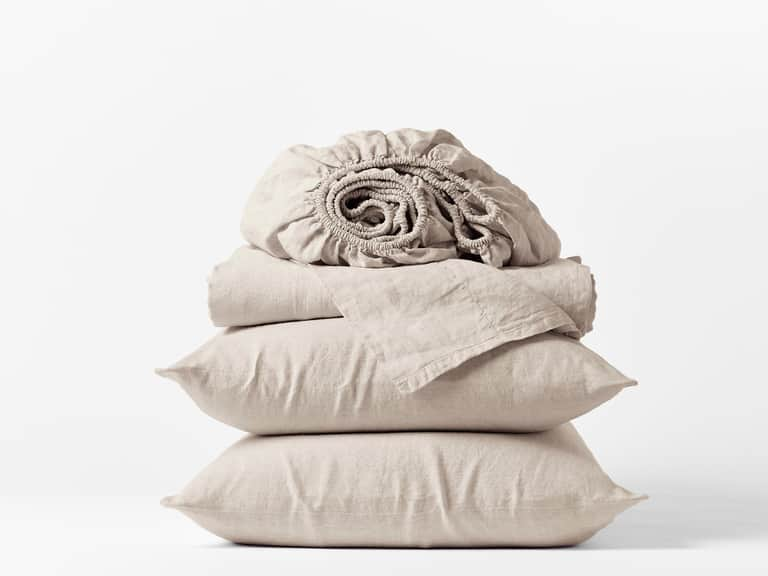
Sleep and Beyond’s 100% Organic Cotton Percale Sheet Set offers a useful reference point. Its product information describes GOTS-certified organic cotton percale with a 270 thread count, a crisp and lightweight feel, and fitted-sheet options designed for mattresses up to 18 inches deep. The details are a starting place, not a verdict. A sheet is experienced in a bedroom, against a body, through changing seasons and repeated laundry days. Understanding the fabric helps make those details legible.
The small architecture of a percale weave
All woven fabric is built from two sets of yarns. The lengthwise yarns are called warp; the crosswise yarns are called weft. In plain weave, the warp and weft interlace in a simple over-under sequence. Percale is a closely woven plain-weave fabric, typically made with a balanced arrangement that gives both sides a similar appearance. There is no elaborate float of yarn to create a pronounced sheen. The surface is relatively level and matte.
That simple structure has a distinct tactile effect. The yarns meet one another frequently, creating a fabric that can feel crisp and composed rather than slippery or plush. A new percale sheet may have a faintly papery firmness. With washing and use, it often relaxes and softens, while retaining the characteristic cool, dry sensation that distinguishes it from many sateen sheets. “Crisp,” in this context, does not have to mean stiff. It describes a combination of surface, drape, and response: the fabric feels neat beneath the hand and does not cling in the way a slicker textile might.
Plain weave is not a promise of uniform results. Two percale fabrics can feel quite different because the weave is only one part of the construction. A fine, well-spun yarn may produce a smooth, light cloth; a heavier yarn or denser construction may make a more substantial sheet. Finishing can soften or alter the initial hand, and repeated washing changes it again. The word “percale” identifies a family of construction, not a single, standardized sensation.
What organic adds—and what it does not
Organic cotton begins with agricultural standards governing the cotton fiber. A certification such as the Global Organic Textile Standard, or GOTS, can offer a broader framework that covers organic fiber content and specified processing and social criteria across the textile supply chain. The precise scope depends on the standard and the product’s certification. A careful reader can check the label or certification information rather than relying on the word “organic” alone.
Organic status does not dictate whether a sheet feels crisp, silky, heavy, or soft. Those qualities depend on the fiber and the making of the cloth. A GOTS-certified percale sheet can be crisp because it is percale; its organic certification is not a special weave or finish. Nor does “organic” mean that every environmental impact has disappeared. Cotton farming and textile production still involve land, water, energy, processing, transport, and decisions about durability. Certification is useful evidence, but it is not a substitute for considering the whole life of a textile.
This distinction helps separate two questions that are often bundled together. The first is, “How was the fiber produced?” The second is, “How will this fabric feel and perform?” A well-informed choice asks both. In the case of organic cotton percale, the answer may combine a verifiable fiber standard with a weave known for a matte, airy hand. That combination can be appealing to someone seeking breathable sheets and a more traceable material, but it should not be mistaken for a guarantee of a particular night’s sleep.
Thread count: useful information, limited authority
Thread count is usually presented as a measure of how many warp and weft threads occupy a square inch of fabric. It has become a shorthand for quality, sometimes accompanied by numbers that look more decisive than they are. In practice, thread count alone cannot tell you whether a sheet will be comfortable, long-lasting, or well made.
Counting methods may differ, and the number does not describe the quality of the yarn, the consistency of the weave, or the finishing. It also says little about whether a fabric is airy or dense in the way a particular sleeper prefers. Very fine yarns can be woven into a high-count fabric, but a higher number is not automatically better. As yarns become finer and more numerous, the cloth may feel smoother or denser, depending on construction; the result is not a simple upward scale of comfort.
In percale, the weave and the yarns deserve at least as much attention as the count. A moderate thread count can be entirely appropriate for a crisp, breathable sheet, particularly when the fabric is made from suitable yarns and woven consistently. Sleep and Beyond lists its organic cotton percale at 270 thread count. That figure helps describe the set, but it cannot, by itself, establish how the sheets will feel to a particular person or how they will behave after years of care.
When comparing labels, look for a fuller account: fiber content, weave, certification details, fabric weight if supplied, finishing, construction, and clear care instructions. The quality of stitching and elastic matters too. A sheet that feels good but slips from the mattress or fails at a seam is not a successful piece of bedding. The number is one clue among several, not the whole investigation.
Percale and sateen: two different kinds of smooth
It is tempting to arrange sheets on a ladder from rough to luxurious, but the comparison between percale and sateen works better as a matter of preference. Percale’s one-over-one-under weave creates a balanced, matte surface. Sateen uses a different arrangement, with yarns passing over more threads before going under one, bringing longer floats to the face of the fabric. Those floats tend to create a smoother surface and a soft sheen.
Some sleepers prefer the clean, cool touch of percale and the way it stays relatively dry against the skin. Others prefer sateen’s softer drape and more fluid hand. Percale can feel crisp and lightly structured; sateen can feel smooth and enveloping. These are tendencies, not universal laws. Fiber, yarn, finishing, room temperature, personal sensitivity, and even the condition of a mattress protector can alter the impression.
If you already know that you dislike slippery sheets, percale may be a sensible place to start. If you want a smooth, close-to-the-skin surface, sateen may be more inviting. Neither weave is inherently superior. A comparison is most useful when it asks what kind of contact feels comfortable to you, rather than which label sounds more luxurious.
Why breathable does not mean cold
Percale is frequently recommended for warm sleepers because its open, balanced construction can encourage airflow and its surface tends to feel less slick than sateen. The description “cool” is partly literal and partly sensory: a matte, dry fabric may feel cooler to the touch, while the room’s temperature, humidity, bedding layers, and body heat determine the conditions through the night.
No sheet can regulate body temperature in isolation. A breathable fabric may help moisture disperse and reduce the feeling of trapped heat, but it cannot compensate for an overheated room, a heavy duvet, or a mattress that retains warmth. Likewise, a lightweight sheet may feel comfortable in a warm climate and still be used in a cold one when layered with blankets. The fabric is one component of a sleep environment, not a thermostat.
For people who wake warm, a useful approach is to assess the whole bed: the sheet weave, the duvet’s fill and cover, the mattress surface, and room ventilation. Percale’s crispness may be a pleasant part of that arrangement. It is not a medical treatment for night sweats or other health concerns, and persistent discomfort may have causes that bedding cannot address.
A practical way to compare percale sheets
When shopping or researching, resist the impulse to begin and end with a single specification. Instead, consider a short checklist that connects construction to everyday use:
- Fiber: Check whether the fabric is 100% cotton or a blend, and look for clear organic certification information if that matters to you.
- Weave: Confirm that the sheets are percale, rather than assuming that “crisp” or “cool” describes a specific construction.
- Yarn and fabric details: Thread count can provide context, but consider any information about fabric weight, fiber quality, and finishing as well.
- Fit: Measure the mattress, including any topper. A fitted sheet’s pocket depth should accommodate the full mattress height without being stretched to its limit.
- Construction: Look at elastic coverage, corner design, hems, and seam finishing. These details influence how a sheet behaves after repeated use.
- Care: Check whether the laundering instructions fit your routine. A sheet that requires care you will not provide may not be a practical choice.
Sleep and Beyond’s set is described as including a flat sheet, a fitted sheet, and pillowcases, with different configurations for several bed sizes. Its fitted sheet is listed with deep pockets of up to 18 inches and reinforced corners. These are useful points to verify against the exact size and product information before choosing. Mattress dimensions vary, and a deep pocket is not a universal guarantee of fit: a very thick mattress, topper, or protective layer can change what is needed.
Care that preserves the hand
Good care is not a complicated ritual, but it is a form of attention. Follow the manufacturer’s label first; instructions can differ with dyes, finishes, construction, and the specific product. For cotton percale, washing with like colors and using a gentle detergent are sensible defaults. Avoid overcrowding the machine, which can keep sheets from circulating freely and may contribute to creasing or uneven rinsing.
Excessive detergent is not a route to extra cleanliness. Residue can leave fabric feeling less fresh and may collect in the weave. If the care label permits, a warm wash can be appropriate for routine laundering, while cooler water may help reduce energy use and be gentler on some colors. The right temperature depends on the label, household needs, and the type of soiling. There is no need to treat every sheet as though it were laboratory equipment.
For drying, moderate heat is generally kinder than prolonged high heat. Remove sheets promptly when the cycle ends; this helps limit hard creases and gives the fabric a chance to be folded or put back on the bed without sitting damp in the drum. If line drying is practical, it can reduce reliance on a dryer, though direct sun and local conditions may affect color over time. Ironing is optional. A percale sheet’s slight wrinkles are part of its ordinary life, not evidence of poor quality.
New sheets may feel firmer than they will after several washes. Softening is gradual, and the aim is not to force it through harsh chemicals, fabric softener, or extreme heat. Conventional fabric softeners can leave deposits that alter absorbency and hand; whether to use one depends on the manufacturer’s instructions and your preferences. Often, ordinary laundering and use are enough. With care, cotton fibers can settle into a more familiar softness while retaining the crisp character of the weave.
The first wash, and the first night
Before making the bed, wash new sheets according to their care label. This removes handling residues and helps the fabric reach its working feel. Once dry, notice how it behaves rather than judging it by a quick touch in a showroom or on a screen. Percale can seem plain beside a glossy fabric, but its virtues become clearer in use: the smooth, dry surface; the way it moves without clinging; the sound of the cloth when it is pulled straight.
Then give it time. A sheet is not a static object. Its texture changes with laundering, and a sleeper’s impression may change as well. What first seems too crisp may become comfortable after a few cycles. What feels wonderfully cool in July may need an extra blanket in January. The useful question is not whether percale is universally soft, but whether its particular combination of breathability and structure suits the way you sleep.
A note on “hotel quality”
The phrase “hotel quality” carries a powerful little fiction: the untouched bed, the white linen, the promise of an effortless night. In a domestic bedroom, though, the relevant measure is less theatrical. Can the sheet be washed without special fuss? Does it fit? Does its surface feel pleasant after a long day? Does it hold up to ordinary use?
Hotel beds also depend on more than sheets: laundering practices, mattress construction, room temperature, and layers all contribute to the sensation guests remember. A crisp percale set can evoke that tidy, freshly made feeling, but it cannot reproduce an entire hospitality operation. At home, the more durable pleasure may be simpler: a fabric that breathes, washes, and feels increasingly familiar.
The case for a measured choice
Organic cotton percale is a strong option for anyone drawn to a matte finish, a crisp hand, and breathable everyday bedding. Its defining feature is not a remarkable thread-count number or an extravagant sheen, but a plain weave that gives the fabric its characteristic structure. Organic certification can add meaningful information about fiber sourcing and processing; it does not dictate the feel. Fit, yarn quality, finishing, and care complete the picture.
Sleep and Beyond’s organic cotton percale sheets make a concrete example of these ideas: GOTS-certified cotton, a percale weave, a stated 270 thread count, and mattress-fit details that matter in practice. Readers considering the set can use those specifications as a basis for comparison, while remembering that comfort remains personal and that product details should always be checked for the exact size and current version.
In the end, crispness is not a defect to be washed away. It is a particular kind of ease: the cloth keeps its shape, lets air move, and meets the skin without fuss. A percale sheet is at its best when the construction disappears into the ordinary business of sleeping—noticed briefly, perhaps, on the first turn of the night, and then not at all.
Frequently asked questions
Does organic cotton percale get softer?
It often relaxes and softens with repeated washing and use. The amount of change depends on the cotton yarn, construction, finishing, and laundering. Softening does not mean the fabric will lose every trace of its crisp, matte character.
Is a higher thread count better for percale?
Not necessarily. Thread count is one specification, not a complete measure of comfort or durability. Weave consistency, yarn quality, finishing, and construction matter too. A moderate count can suit percale’s crisp, breathable feel.
Are percale sheets always cooler than sateen?
Percale often feels cooler and drier to the touch, while sateen tends to feel smoother and more draped. The experience depends on the fabric and the sleeper, as well as room conditions and the rest of the bedding.
What does GOTS certification tell me?
GOTS is a textile standard with requirements related to organic fiber and processing, along with other criteria. Check the product’s certification details to understand what applies to the item in question. Certification does not describe how crisp or soft the sheets will feel.
How should I wash cotton percale?
Follow the care label. In general, washing with like colors, avoiding excessive detergent, and drying on moderate heat can help preserve the fabric. Remove sheets promptly from the dryer to reduce pronounced creasing.
Product specifications and certification details can change. Consult current manufacturer information and the care label for the item you own or are considering.