Bedding • A practical guide
Choosing a Linen Sham: What to Look For in Coyuchi Bedding
A linen sham is a small piece of domestic architecture: fabric, seams, closure, and proportion assembled around a pillow. Its appeal may begin with color or texture, but how it feels after washing—and whether it fits the pillow it is meant to cover—depends on details that are easy to miss at a glance.
Published November 22, 2026
In a well-made bed, the sham is often asked to perform two jobs at once. It should look composed when the bed is made, then feel unobtrusive when the pillows are taken down and used. That dual role helps explain why choosing one can be less straightforward than choosing a sheet. A sham is not simply a pillowcase with a more formal name. Its dimensions, finishing, and opening are part of its character, and its relationship to the rest of the bedding matters as much as the fabric itself.
Linen brings particular pleasures to this small exercise in judgment. Made from flax, it tends to have a visible, slightly irregular surface rather than the even smoothness many people associate with cotton. It can feel crisp or dry at first, depending on the yarn, weave, and finish, then grow more supple with laundering and use. For anyone considering Coyuchi linen shams, the useful questions are not only whether the fabric looks appealing, but what the material description actually says, how the edges are finished, how the sham closes, and whether its care instructions suit the life it will lead.
First, clarify what “sham” means
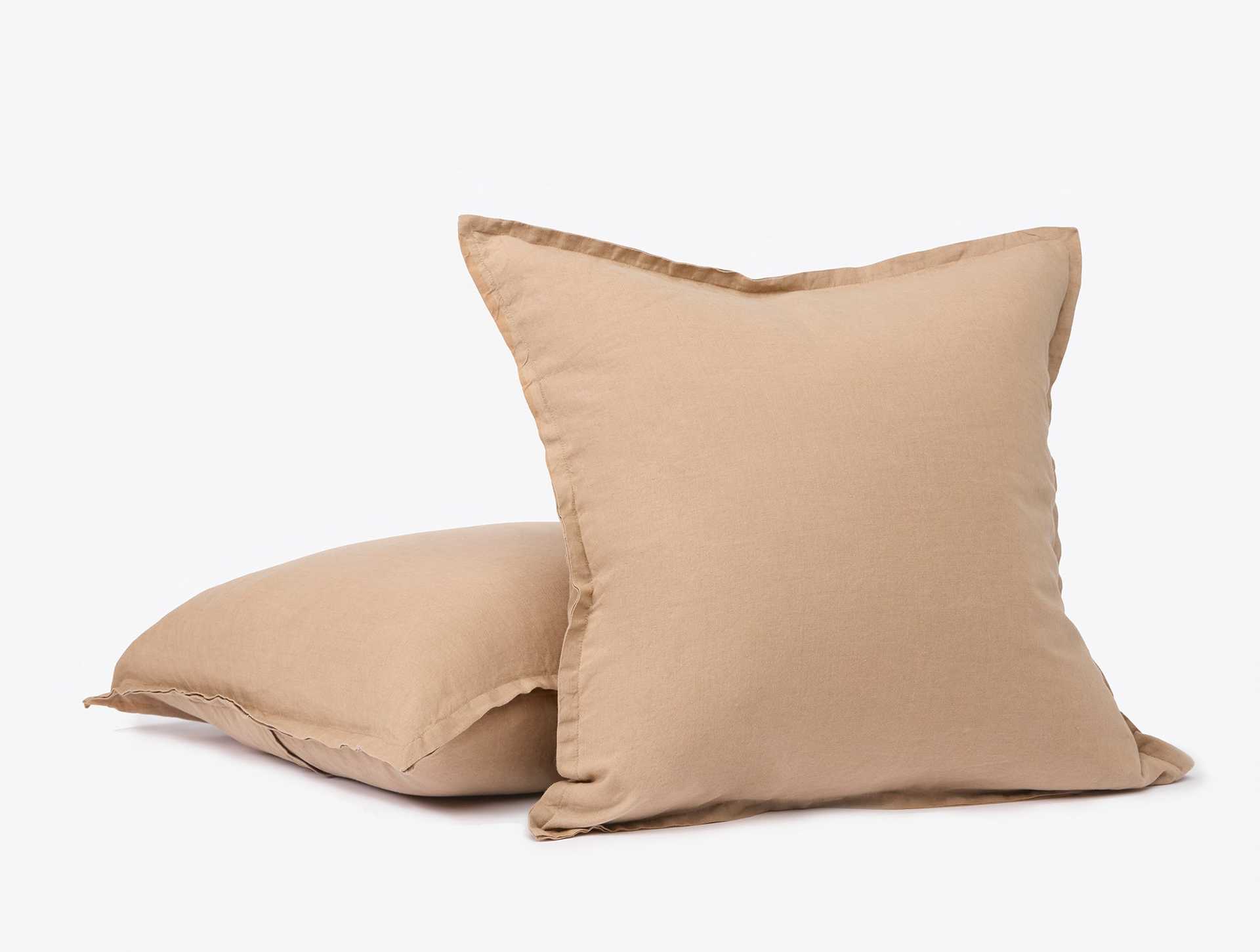
In bedding, a sham is generally a decorative pillow cover, often designed to coordinate with sheets or a duvet cover. The word does not prescribe a single shape or construction. Some shams have a flange—a border extending beyond the main body of the cover—while others have a simple stitched edge. Some close with an envelope-style overlap; others use buttons, ties, or a concealed closure. A pillowcase, by contrast, is usually made for sleeping and commonly has a straightforward opening, though the line between the categories can blur.
This distinction is useful rather than precious. If the pillow will spend the night beneath your head, a soft surface and a comfortable opening may matter most. If it will sit upright against a headboard, a tailored border or a more structured shape may be the point. Before comparing fabrics, decide which job the cover is expected to do. It is a surprisingly effective way to avoid buying a handsome object that turns out to be awkward in daily use.
Product names can add to the confusion. A decorative linen pillow cover is not necessarily a sham, and it should not be assumed to have the size, closure, or sleeping function of one. Coyuchi’s Organic Relaxed Linen Decorative Pillow Cover, for example, is described as a cover for a separately purchased insert, made from organic linen and washed for a relaxed, rippled feel. That information makes it a relevant point of comparison for linen texture and care; it does not establish that the cover is a bed sham or that it will fit a particular sleeping pillow. The distinction is one worth preserving when reading any bedding description.
Read the fiber description, not just the mood
Words such as “relaxed,” “natural,” and “soft” describe an impression, not a complete account of a textile. To assess the material, look for the fiber named plainly. Is the fabric linen made from flax, a linen-cotton blend, or a different textile styled to resemble linen? If organic sourcing is important, look for a clear account of the fiber and the relevant certification rather than relying on a broad environmental adjective.
Some Coyuchi linen bedding descriptions identify organic flax grown in France and linen woven in Portugal. The details of origin are useful because they tell you something about the stated route from crop to cloth. They do not, by themselves, answer every question about production, but they are more informative than a vague claim of European craftsmanship. Where a certification such as GOTS is named, read it as a defined standard applying to the certified product and its scope—not as a promise that every environmental or social question about a supply chain has been settled.
It also helps to remember that “organic” and “comfortable” are separate questions. A fiber’s cultivation standard does not dictate whether the finished fabric feels crisp, fluid, heavy, or airy. Those qualities depend on a combination of fiber length and quality, yarn preparation, weave, fabric weight, finishing, and the way the cloth has been washed. A thoughtful comparison considers both the provenance claim and the physical material presented to the sleeper.
Texture is a feature, but it is personal
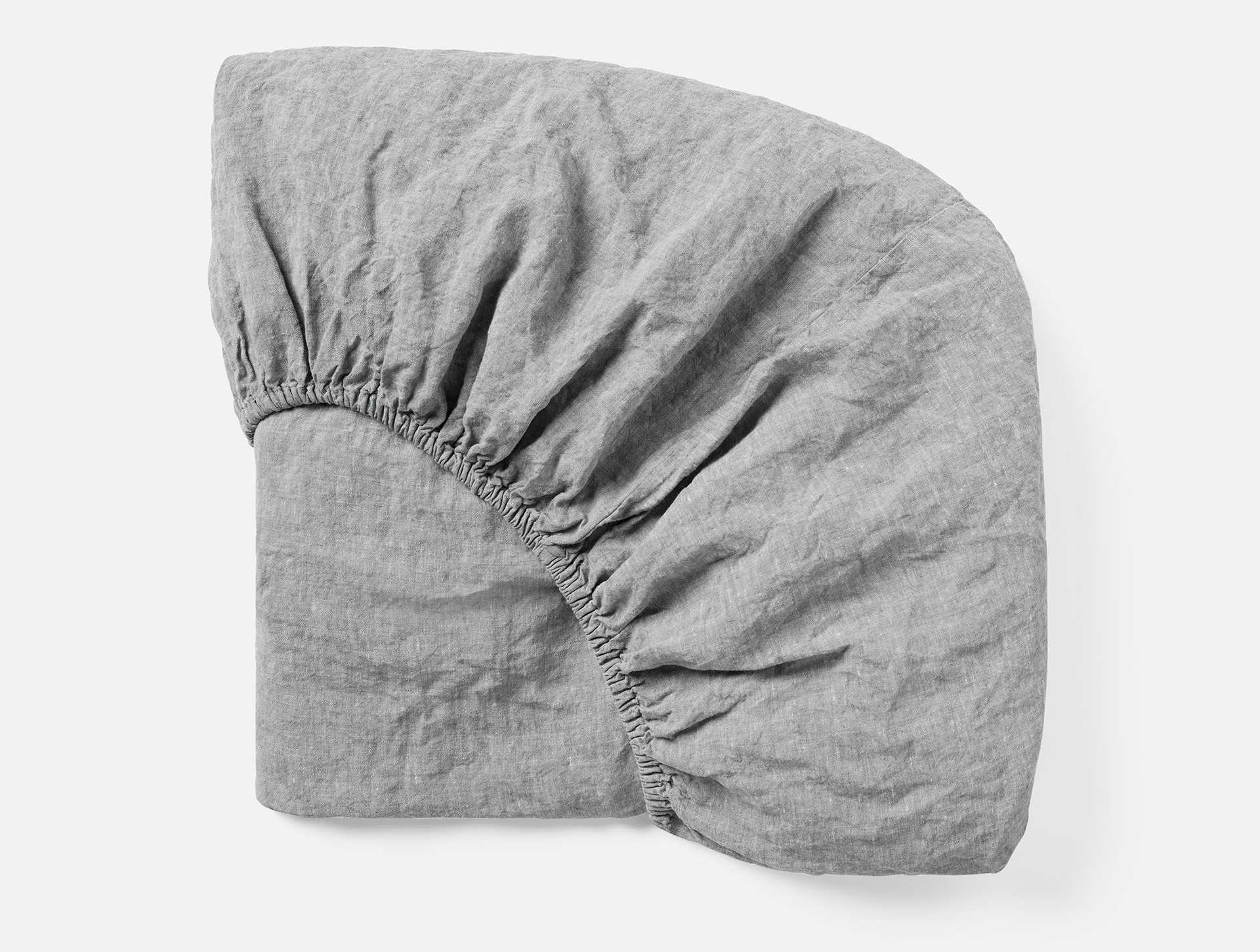
Linen’s texture is part of its appeal, and also the reason it does not suit everyone. Its surface may show slubs and small variations that are normal consequences of the fiber and yarn. A relaxed or garment-washed finish can soften the hand and reduce the sense of stiffness, but it does not turn linen into smooth percale. Expecting it to do so is like ordering a weathered wooden table and being disappointed that it has grain.
Think about the sensation you enjoy against your face. If you prefer a very smooth, cool, uniform surface, a tightly woven cotton percale pillowcase may be a more natural fit. If you enjoy a dry hand, a little texture, and a fabric that becomes less formal with use, linen may make sense. These are not opposing standards of quality; they are different preferences. In a sham used mainly for display, texture may be a visual choice. In a sham used for sleep, it becomes an intimate one.
Claims about linen’s breathability are often part of the conversation. Linen is commonly valued for its ability to handle moisture and for its relatively open, airy feel, though a sleeper’s comfort also depends on room temperature, bedding layers, personal physiology, and the fabric’s actual construction. No fiber guarantees cool sleep in every bedroom. Treat broad performance language as a description of a material’s tendencies, not a prediction about your particular night.
Construction: where the small decisions show
A sham’s construction is easiest to judge by slowing down. Look at the seam allowances and stitching: are the seams straight and consistent, with no loose threads or puckering? Are the corners shaped cleanly? Does the border lie flat, if there is one? These details do not need to be ornate. They need to suit the fabric and withstand the routine tugging, turning, and laundering that bedding receives.
Closures deserve similar attention. An envelope closure is simple and avoids hard hardware, but the overlap needs enough depth to keep the pillow from showing through or slipping out. Buttons can be secure and decorative, yet their placement and material may affect comfort if the sham is used for sleeping. Ties create a different look and may require a little more handling. A concealed zipper can give a neat finish, though it introduces a component that should be checked for smooth operation and a comfortable position.
The phrase “finished detail” can mean anything from a stitched cuff to a substantial flange. A pick-stitched cuff, for instance, is a subtle line of stitching near an edge; it can lend definition without adding a wide border. If that detail appears in a product description, it is reasonable to treat it as a construction feature, not as proof of superior durability on its own. Stitch quality, fabric weight, seam design, and care all play a part in how a piece holds up.
For a sham intended to be slept on, inspect the surfaces and closures that will meet the face. Ask whether the opening lands beneath the pillow or at its side, whether any buttons or zipper pulls could press against you, and whether the pillow remains secure when moved. For a decorative sham, the silhouette may have greater priority, but the cover should still be easy to remove. There is little elegance in a cover that requires a small negotiation every time it needs washing.
Fit is arithmetic before it is aesthetics
The most persuasive color cannot compensate for a sham that is the wrong size. Check the dimensions of the finished cover, then compare them with the dimensions of the pillow insert—not merely the bed size printed on the package. A standard pillow, a queen pillow, and a decorative square insert are not interchangeable. Even within a familiar category, dimensions can vary among manufacturers.
Measure the insert when it is relaxed, rather than squeezing it flat. Then compare its width and length with the sham’s stated measurements. A cover that is too small may strain the seams and flatten the pillow; one that is too large can sag or look slack. The right amount of ease depends on the pillow’s fill and the effect you want. A plump insert can create a more tailored look, while a looser fit may appear softer and less formal. If a sham is sold individually, remember to calculate how many are needed for the bed arrangement you have in mind.
Read the package contents carefully. “One sham” does not generally mean an insert is included, and decorative covers may be sold separately from pillow forms. Product descriptions should also make clear whether a set includes pillowcases, shams, or both. The difference may sound obvious when written down; online, where photographs and names can compress distinctions, it is easy to overlook.
Care instructions are part of the buying decision
Linen is often chosen in part because it can be laundered at home, but “machine washable” is not a complete care plan. Check the recommended water temperature, cycle, drying method, and any warnings about bleach or ironing. Instructions differ among products and finishes. A sham made from linen with a relaxed, washed finish may be intended to retain a soft, lived-in appearance; pressing it into a crisp hotel-bed rectangle may not be the result the maker has designed for.
For many relaxed linen pieces, the instructions call for a gentle cycle, low-heat tumble drying, and prompt removal from the dryer. A warm iron may be optional. Follow the specific label rather than treating a general linen rule as universal. Washing with like colors can help protect pale fabrics from dye transfer, while avoiding overloading the machine gives bedding more room to move. If the product specifies cold water, do not substitute a hotter wash on the assumption that all natural fibers require the same treatment.
Care also shapes how the material changes. Linen commonly softens with repeated washing, but that does not mean it is indestructible. Excessive heat, harsh chemicals, rough handling, or an overfull dryer can place needless stress on fibers and seams. A steady routine is usually more useful than elaborate rituals: use the recommended cycle, avoid unnecessary high heat, and store the sham clean and fully dry.
Before buying, consider your own laundry habits with the same seriousness you give the fabric. If you iron every cover, choose a textile and finish you are willing to press. If you prefer a relaxed surface, make sure the product description and care instructions support that look. If the sham will be washed frequently because it is used nightly, easy removal and a durable opening may matter more than decorative trim.
How to assess Coyuchi linen shams
When considering a Coyuchi sham, approach the listing as a set of claims to verify, not a finished verdict. Start with the exact product name and whether the item is described as a sham, pillowcase, or decorative cover. Then note the fiber composition, stated origin, certification, finish, dimensions, closure, and care instructions. If one of those details is missing, look for it in the manufacturer’s full description or ask the retailer before ordering.
For a coordinated bed, compare the sham’s color and texture with the sheets or duvet cover under ordinary light if possible. Linen’s surface can absorb and reflect light differently from smoother cotton, so two products described in similar color terms may not look identical. A relaxed finish may also give a shade a softly varied appearance. That can create an appealing layered effect, but exact matching should not be assumed from a color name alone.
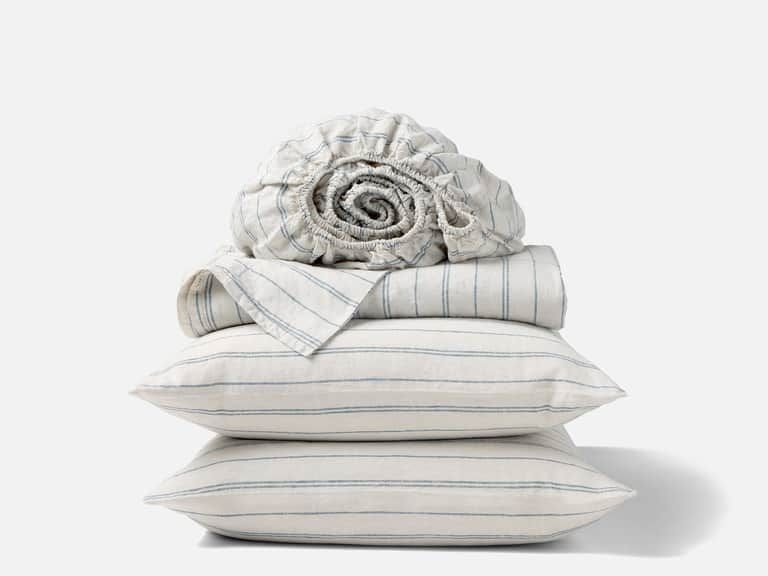
Consider the broader bedding arrangement, too. A sham may be part of a composed stack of pillows or a single accent against plain sheets. If a sheet set already has a pronounced weave or stripe, a quieter sham may keep the bed from looking overworked. Conversely, a textured cover can give a simple arrangement depth without requiring a new color. The point is not to follow a rule about matching, but to make deliberate choices about what the eye—and the sleeper—will encounter.
A practical checklist before you decide
- Confirm the category: Is the item explicitly a sham, a pillowcase, or a decorative pillow cover?
- Check the fiber: Does the listing name linen or flax clearly, and does it describe a blend?
- Verify organic claims: Look for a named certification and avoid treating a general “natural” claim as equivalent.
- Compare measurements: Match the sham’s dimensions to the actual pillow insert, not just the bed size.
- Inspect the opening: Consider how the closure works, where it sits, and whether the pillow will remain in place.
- Look at the finish: Decide whether you want a relaxed, textured surface, a border, or a simpler edge.
- Read the care label: Confirm that the washing and drying routine is realistic for your household.
- Check what is included: Determine whether the price covers one cover, a pair, or an insert as well.
The useful answer is the one that fits your habits
Choosing a linen sham is not a test of whether one fabric is objectively best. It is a small inquiry into how material, construction, and routine meet. Linen can reward patience with a softer hand and a relaxed appearance; it can also retain a texture that a lover of smooth cotton may never warm to. A well-considered sham has seams and closures suited to its purpose, dimensions suited to its pillow, and care instructions that can be followed without turning laundry day into a specialist pursuit.
For Coyuchi bedding, as for any bedding, the strongest decision begins with the precise product details. Confirm what the item is, what it is made from, how it is finished, and how it is meant to fit. Then ask the less technical question: will you enjoy touching it, washing it, and seeing it on your bed? A sham is a modest object, but it lives unusually close to the rituals of sleep. Its success is measured not by the photograph that first attracted you, but by whether it continues to feel right after the bed has been made, slept in, and made again.